Flash sync speed
Introduction
In the previous blog post, we saw how the use of flash can open up new creative possibilities for a photographer. From this post onward, we will begin to clarify some of the basic technical concepts related to how flash works and how it is used.
In particular, we will examine why, when using flash, we cannot always choose any shutter speed we want, but must take into account a specific value: the flash sync speed.
We will look at what exactly happens when we exceed this speed and why doing so can result in uneven exposure across the image. Finally, we will explore how some modern flash units can overcome the limitation of the normal sync speed by making use of High-Speed Sync (HSS).
Focal Plane Shutter
The shutter is one of the three basic elements that determine the exposure of a photograph, along with the lens aperture and the sensor’s sensitivity (ISO).
The type of shutter that has become standard in most cameras over the past several decades is the focal plane shutter. In its basic form, it consists of a control mechanism—electromechanical in modern digital cameras and fully mechanical in older film cameras—as well as two light-tight curtains positioned directly in front of the sensor or film.
These two curtains move in a plane parallel to the sensor and are responsible for precisely controlling the length of time during which light reaches it. In this way, the shutter speed is determined and, consequently, the amount of light recorded by the camera.

Figure 1: Focal-plane shutter of the Fujifilm X-T3.
Its operation differs at slow and fast shutter speeds.
At slow shutter speeds:
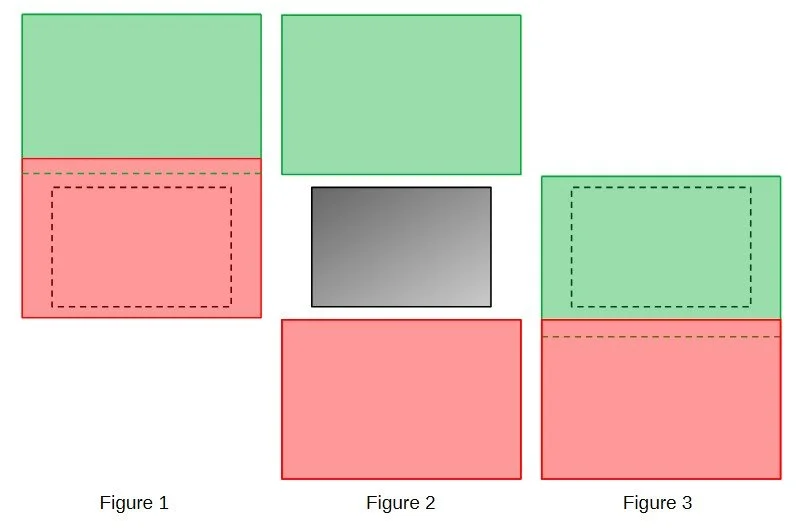
Figure 2: Movement of the Shutter Curtains at Slow Shutter Speeds
Figure 1: The camera sensor is represented by the black dashed line. Before the exposure begins, the sensor is completely covered by the first curtain, shown in red.
Figure 2: When the shutter is activated, the first curtain moves fully downward, revealing the entire surface of the sensor. During this interval, light reaches the sensor unobstructed, and the photographic exposure takes place.
Figure 3: Once the selected exposure time has elapsed, the second curtain begins to move, gradually covering the sensor until it completely obscures it, thereby terminating the exposure. The two curtains then return to their initial positions as the shutter is cocked for the next shot, as shown in Figure 1, so that the system is ready for a new operating cycle.
High shutter speeds are achieved in a different way from that described above. In this case, the second curtain begins to move with a slight time delay after the first, before the first curtain has completed its travel. As a result, a narrow horizontal slit is formed between the two curtains, moving vertically across the sensor. Light passes only through this slit, thereby exposing the image.
The process is progressive, as the sensor is never fully exposed to light at the same time. Instead, the slit formed by the two curtains “scans” its surface sequentially from top to bottom, exposing each portion for the period of time corresponding to the selected shutter speed.
At high shutter speeds:
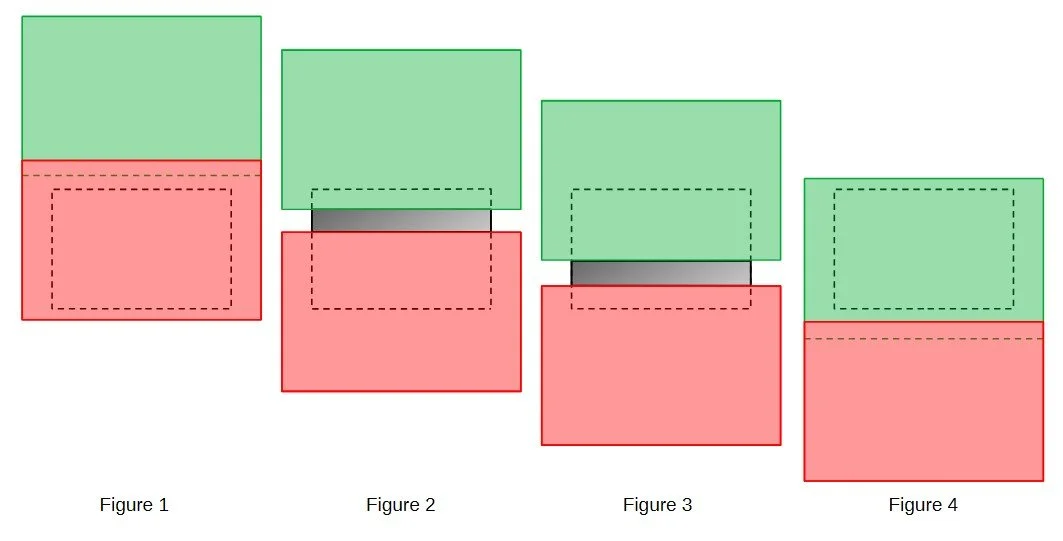
Εικόνα 3: Movement of the Shutter Curtains at High Shutter Speeds
Figure 1: The camera sensor is represented by the black dashed line. Before the exposure begins, the sensor is completely covered by the first curtain, shown in red. The second curtain, shown in green, is in its starting position.
Figure 2: The first curtain begins to move downward, gradually revealing the sensor. Shortly afterward, the second curtain also begins to move, maintaining a constant distance from the first. This distance creates a narrow slit through which light reaches the sensor.
Figure 3: The two curtains continue moving downward in parallel, maintaining a constant slit width. As the slit moves across the sensor, light progressively exposes it from top to bottom, completing the recording of the image.
Figure 4: The first curtain has completed its travel, followed by the second curtain, which now completely covers the sensor, terminating the exposure. The two curtains then return to their initial positions as the shutter is cocked for the next shot, as shown in Figure 1, so that the system is ready for a new operating cycle.
Flash Sync Speed
Flash sync speed is the upper limit at which the shutter can operate in the slow-speed mode (Figure 2), and at the same time, the fastest shutter speed that can be used with an electronic flash (Figure 4).
In modern digital cameras, the sync speed is typically 1/200 sec or 1/250 sec, although the exact value varies depending on the camera model.
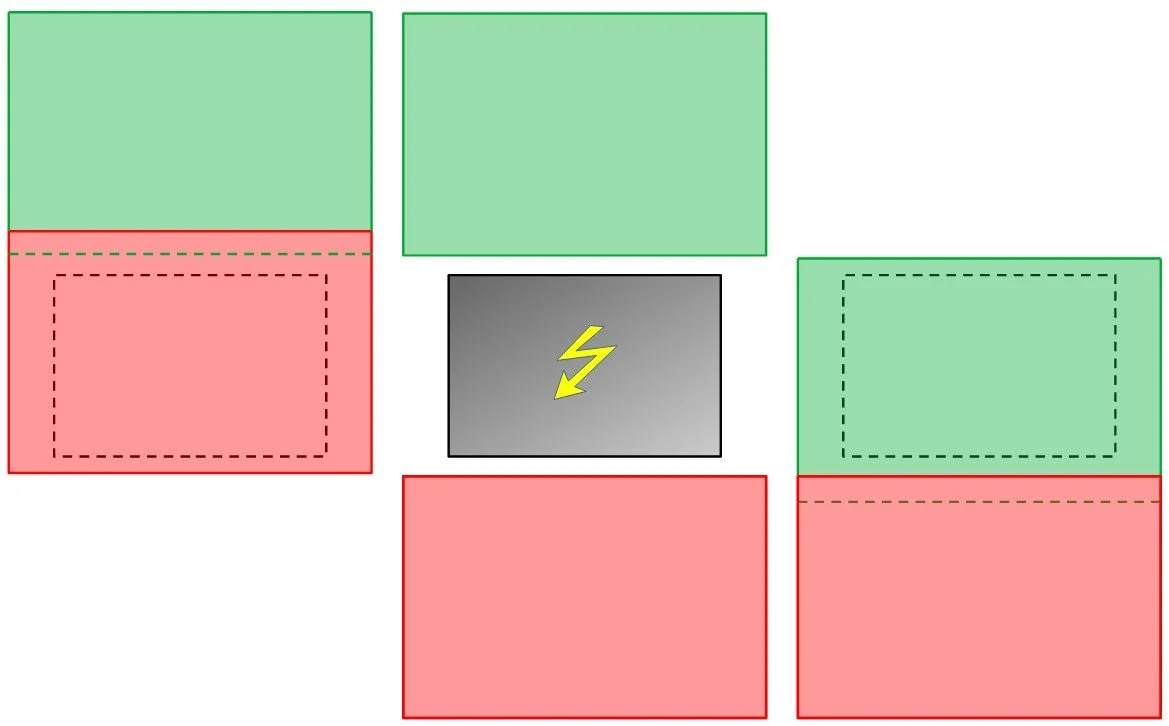
Figure 4: Flash operation at slow shutter speeds (equal to or slower than the sync speed)
If we select a faster shutter speed (e.g. 1/500 sec), the resulting image will contain one area of the frame that is properly exposed and another dark area that was not exposed.
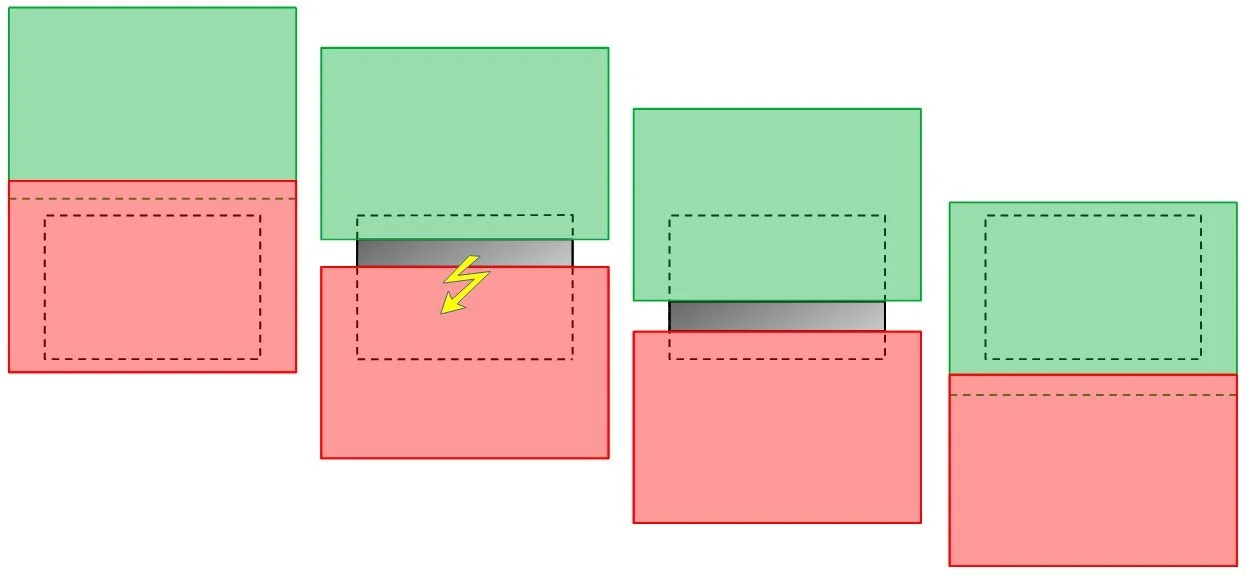
Figure 5: Using Flash at Shutter Speeds Above the Sync Speed

Figure 6: Dark area of the frame caused by selecting a shutter speed higher than the flash sync speed.
The sync speed is usually marked on the shutter speed dial in a different color or with an “X” next to the value, making it immediately recognizable.
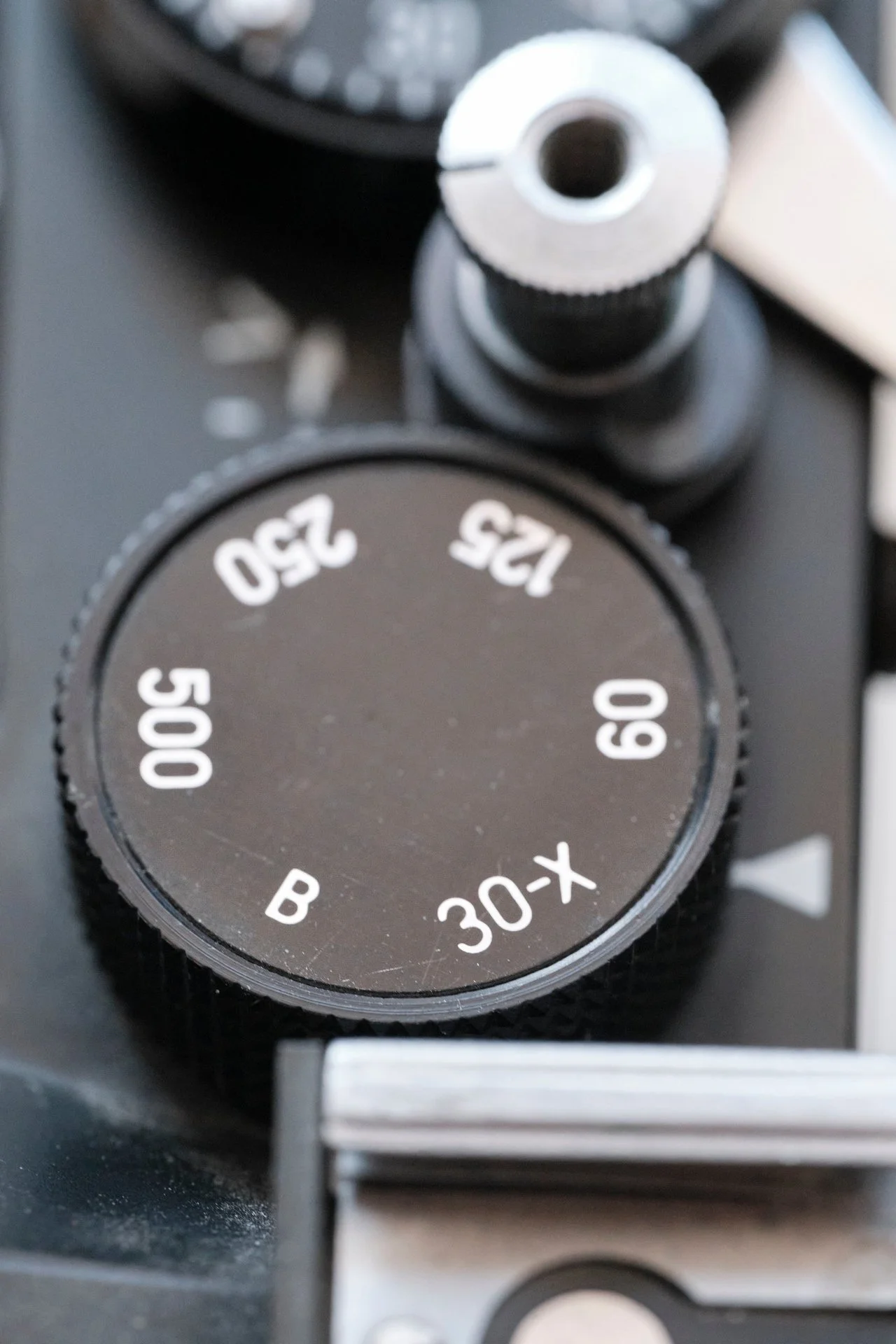
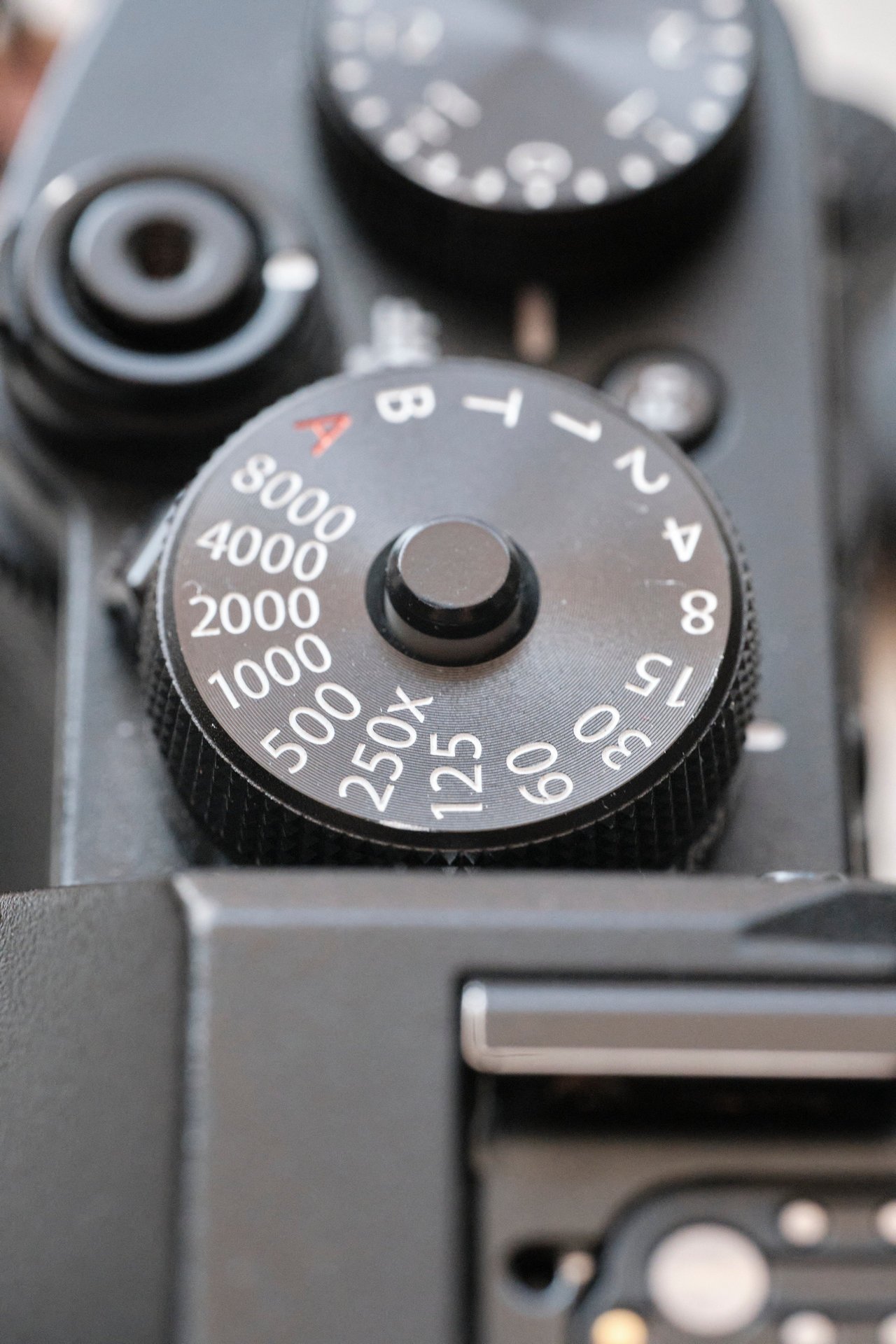
Figure 7: On the left flash sync speed marked on a Zenit 11 (1/30) and on the right on a Fujifilm X-T3 (1/250)
High-Speed Sync – HSS
Depending on the camera and flash model, High-Speed Sync (HSS) may be supported. This feature allows the use of flash at shutter speeds higher than the camera’s normal flash sync speed.
In HSS mode, the flash does not emit a single, short burst of light, as it does during conventional flash synchronization. Instead, it produces a rapid sequence of successive, very short bursts, essentially functioning as an almost continuous light source for as long as necessary.
In this way, as the narrow slit formed between the two shutter curtains moves across and progressively scans the sensor, the successive bursts ensure that every portion of the sensor is illuminated as the slit passes over it. This makes it possible to achieve an even exposure across the entire frame, even at shutter speeds higher than the camera’s normal flash sync speed.
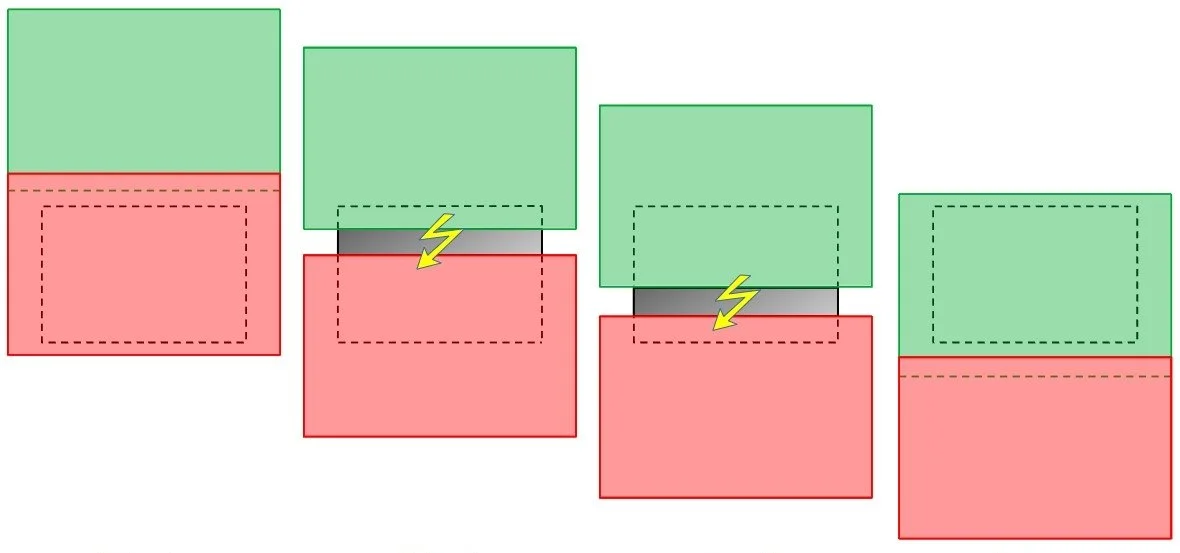
Figure 8: Flash Operation in HSS Mode
High-Speed Sync photography eliminates the limitations imposed by the flash sync speed and allows the flash unit to be used across the camera’s entire range of shutter speeds. The ability to select higher shutter speeds also allows for wider apertures and, consequently, a shallower depth of field, providing greater creative possibilities for composing the frame.


Figure : Left, shot in normal flash mode at ISO 200, 1/250 sec, and f/8. Right, shot in HSS mode at ISO 200, 1/2000 sec, and f/2.8. The difference in depth of field is clearly visible.
The main disadvantages of HSS mode are the reduced effective flash power and the increased thermal stress placed on the flash unit.
As mentioned earlier, in HSS mode the flash does not emit a single short burst of light, but rather a rapid sequence of successive pulses throughout the movement of the shutter curtain slit. As a result, the available light energy is distributed over a longer period, significantly reducing the effective power and, consequently, the range of the flash.
At the same time, the continuous emission of successive pulses generates greater thermal stress, particularly when the flash is operated at high power settings or used for a large number of consecutive shots. For this reason, HSS operation can lead to increased unit temperature and, depending on the model, longer recycle times or activation of the overheating protection mechanisms.