Frame Within a Frame
Composition Rules
Composition is the deliberate process of deciding which visual elements to include in a photograph and how to arrange them within the frame in order to create a harmonious and visually balanced image.
Effective composition is the means by which a photographer guides the viewer’s eye in a purposeful and organized way. When a photograph is carefully composed, the viewer’s attention is first drawn to the elements the photographer wishes to emphasize and make memorable. The eye then naturally moves through the secondary elements, gradually exploring the image as a whole.
To achieve effective composition, various compositional rules and techniques have been developed. These can be applied individually or combined, depending on the photographer’s creative intent. Although commonly referred to as “rules,” they are better understood as visual guidelines that help organize the image and direct the viewer’s attention. Understanding and mastering these principles enables photographers to create images with greater clarity, balance, visual impact, and narrative strength.
Frame Within a Frame
One of these compositional techniques is the Frame Within a Frame. In this approach, the first frame is the photograph's natural boundary, while the second is created by a visual element within the scene that surrounds, encloses, or highlights the main subject. This secondary frame can be formed by features such as a window, doorway, corridor, archway, or even tree branches.
The Frame Within a Frame technique is particularly effective in directing the viewer’s attention toward the subject, creating a stronger focal point and minimizing distractions from other elements within the image. It can also enhance the perception of depth, add visual interest, and strengthen the photograph’s narrative by providing context and a sense of place. When used thoughtfully, this technique helps create images that are both visually engaging and compositionally balanced.
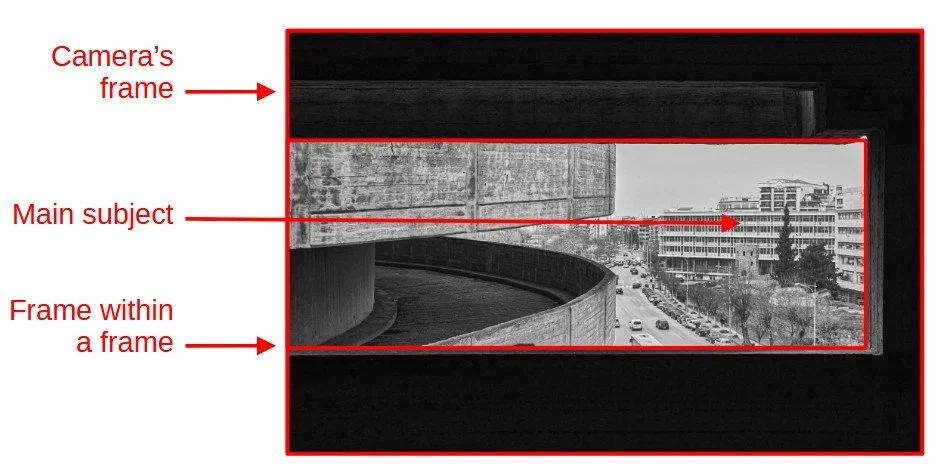
The technique functions as a visual funnel, directing the viewer’s attention toward the intended focal point. Simultaneously, the inclusion of a framing element in the foreground introduces additional layers of depth, strengthens the image’s visual appeal, and contributes to a greater sense of three-dimensionality and narrative within the photograph.
Frame Within a Frame and Cinema
Due to its ability to enhance the visual aesthetics of an image while also conveying deeper symbolic meaning, the Frame Within a Frame technique has been widely employed by film directors throughout the history of cinema.
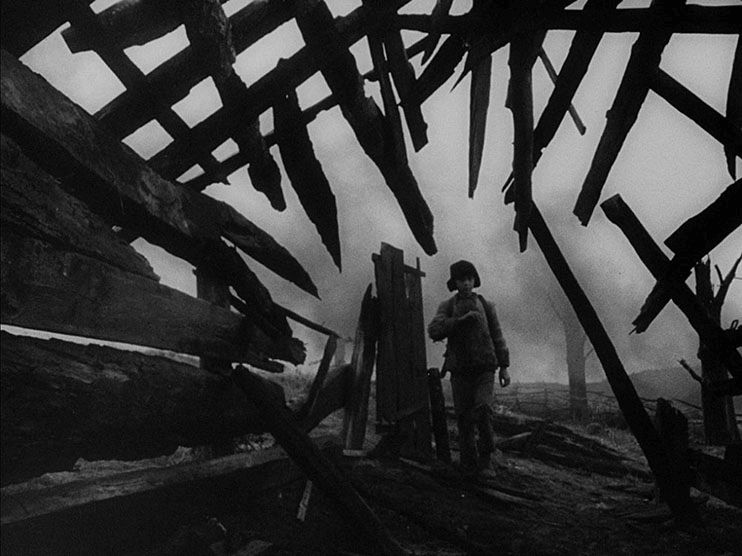
The image above is a still frame from the film Ivan’s Childhood, directed by Andrei Tarkovsky. The film tells the story of Ivan, a twelve-year-old boy whose childhood has been shattered by the events of the Second World War. This scene takes place inside a ruined building, where the damaged walls and collapsed roof create a natural frame around Ivan. This secondary frame adds depth to the composition while transforming the ruins into an active narrative element. The surrounding environment does not function merely as a backdrop; rather, it becomes an integral part of the visual storytelling. Through the use of the Frame Within a Frame technique, the composition emphasizes the boy’s confinement within the horrors of war and reflects the loss of his childhood innocence.
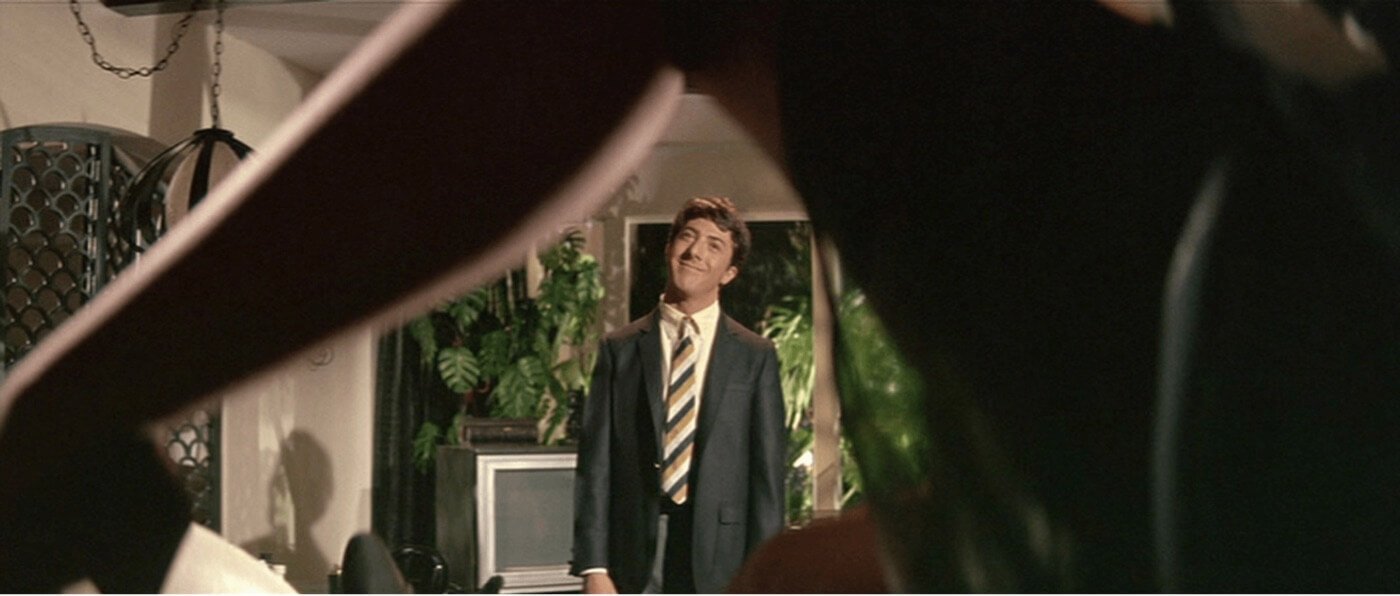
The image above is a still frame from the film The Graduate, directed by Mike Nichols. The film tells the story of Benjamin Braddock, a recent college graduate who returns to his parents’ home and is seduced by the older Mrs. Robinson, leading to the beginning of a secret affair between them. This image is a classic and particularly ingenious example of the Frame Within a Frame technique. The composition is not merely aesthetic; it reveals the power dynamics between the characters. Mrs. Robinson dominates the frame even though her face is not visible, while Benjamin appears smaller and visually confined within the frame created by her body—the very object of his desire and temptation. By using the Frame Within a Frame technique in this way, Nichols transforms composition into storytelling. The image communicates character relationships, psychological tension, and themes of seduction, dominance, and entrapment without the need for dialogue, demonstrating the power of visual language in cinema.
Visual Elements That Can Function as a Frame Within a Frame
The Frame Within a Frame technique can be applied to virtually any genre of photography, whether architectural and landscape photography, portraiture, street photography, or any other photographic discipline. As a result, almost any visual element within a scene can be used by the photographer to create a secondary frame within the composition.
These elements do not necessarily need to have a physical or material presence. An internal frame can also emerge from purely visual relationships, such as strong tonal contrast between light and dark areas, differences in color, or even the creative use of focus and blur.
Nevertheless, certain easily recognizable elements tend to function almost automatically as a frame within a frame. These can be used individually or in combination, strengthening the compositional structure of the image and guiding the viewer’s eye more effectively.
In architectural photography, common examples include windows, doorways, arches, colonnades, corridors, building openings, and other architectural features that create clearly defined visual boundaries within the image. Such elements naturally draw attention to the subject while adding depth, context, and a sense of spatial organization to the composition.
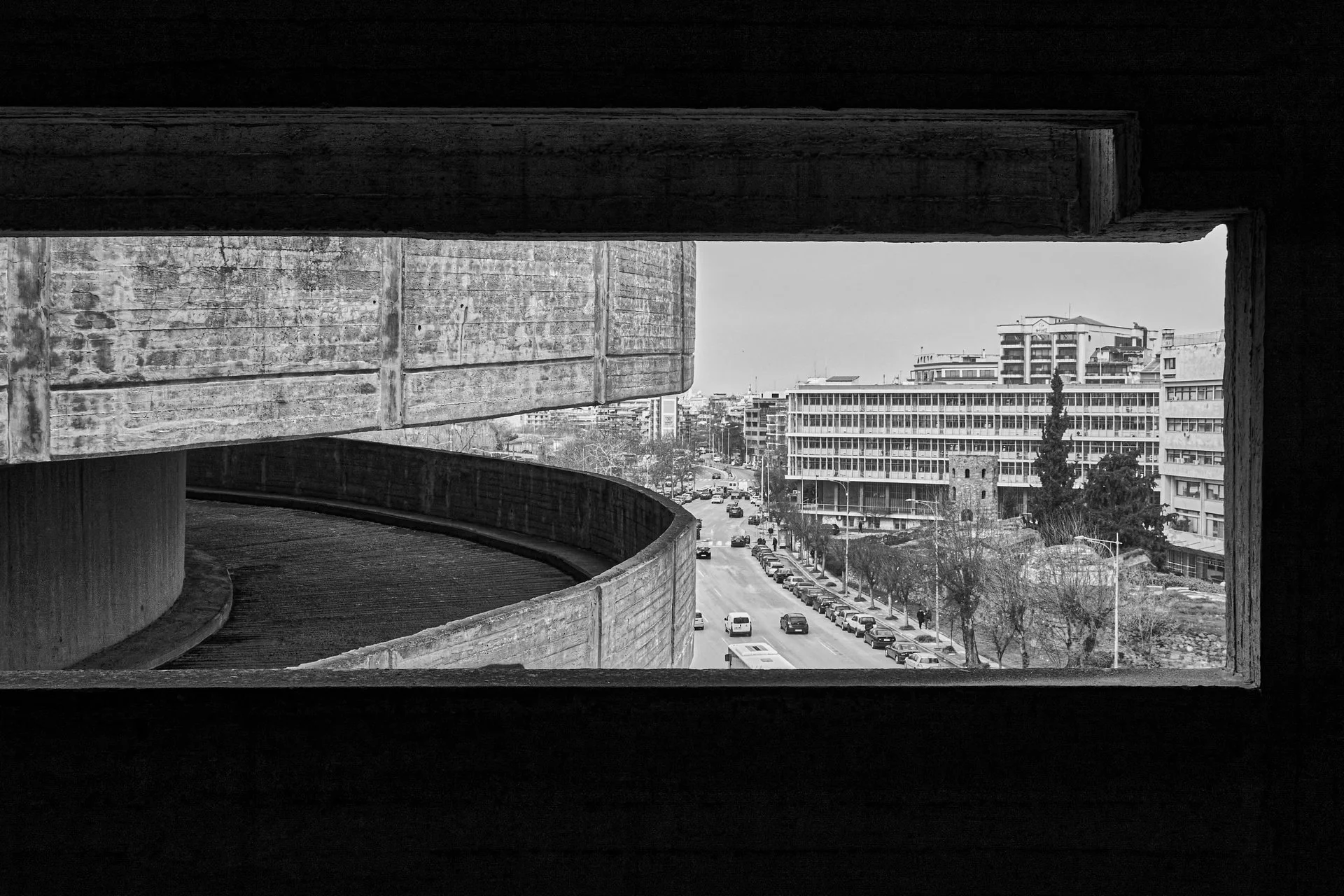
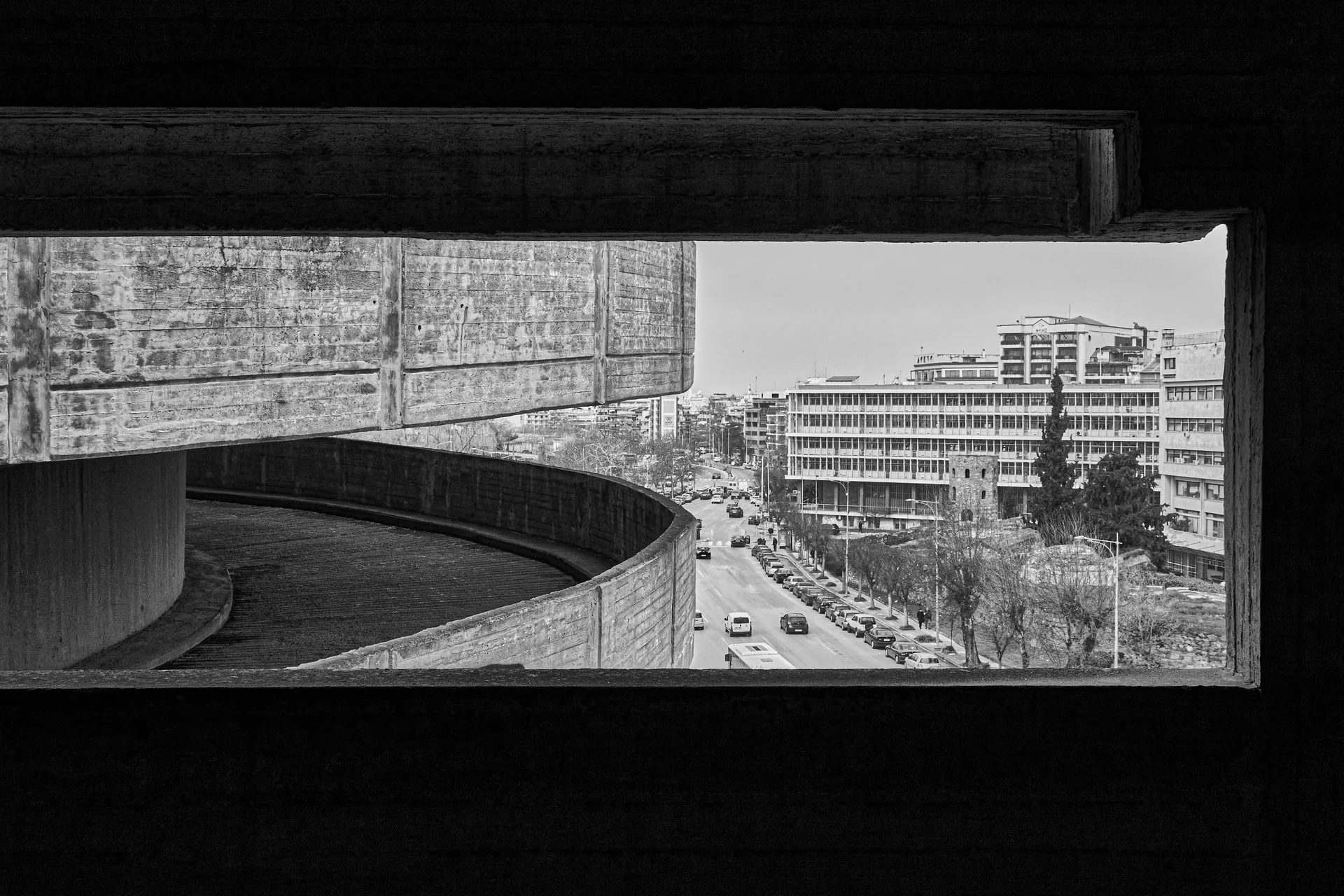
Returning to the first photograph, the Frame Within a Frame technique is achieved through a combination of the large window opening and the strong tonal contrast between light and shadow. The dark concrete opening that surrounds the central portion of the image functions as a secondary rectangular frame within the primary photographic frame. The dark surfaces at the top, bottom, and sides of the image create a natural border that confines and directs the viewer’s gaze toward the brightly illuminated urban landscape beyond. The viewer is transformed into an observer looking out at the world through a narrow opening, creating a sense of observation, discovery, and visual exploration. The inclusion of this opening also expands the spatial organization of the composition into three distinct layers. The first is the foreground, represented by the dark interior of the building and its geometric concrete forms. The second is the middle ground, where the curved ramp enters from the left side of the frame and leads the viewer’s eye into the distance, acting as a powerful leading line. The third layer is the background, consisting of the street, vehicles, and city buildings that complete the urban scene. The frame serves not merely as a decorative compositional device, but as a visual transition from the dark, enclosed interior to the bright urban landscape beyond—a landscape that symbolizes movement, freedom, and the vitality of city life.
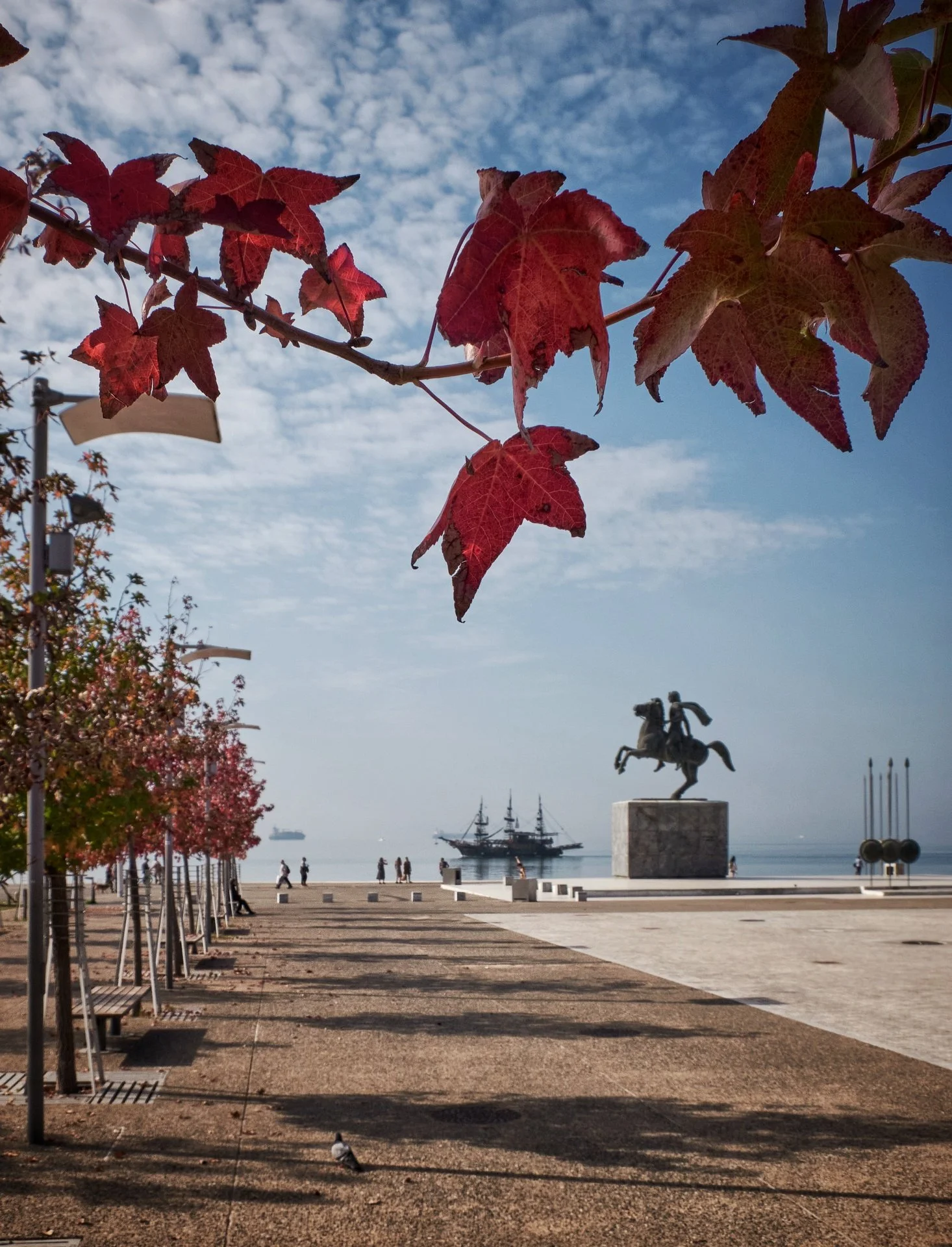
In the photograph above, the Frame Within a Frame technique is applied in a more subtle and organic manner than in the classic examples of windows, doorways, or arches. The inner frame is created by the natural element of the tree itself, specifically the red leaves that extend across the upper part of the image. An important aspect of the composition is that the leaves do not completely surround the subject; instead, they function primarily as a visual “roof,” guiding the viewer’s gaze from the top of the frame toward the center of the image. This creates the impression that the viewer is standing beneath the tree and observing the scene through a natural opening. The inner frame is further reinforced by the color contrast between the warm red and purple tones of the leaves in the foreground and the cool blues of the sky and sea in the background. At the same time, the foliage introduces a sense of seasonality and places the monument within a specific environmental context. As a result, the viewer does not simply observe the statue itself but experiences it through the visual filter of nature and the autumn landscape.

A similar approach can also be seen in the photograph above, this time within a natural landscape. As in the previous example, the leaves do not completely surround the subject but function primarily as a visual “roof,” guiding the viewer’s gaze from the top of the frame toward the center of the image. The framing effect is created not only by the shape and placement of the branches but also by their deliberate defocus. The blurred branches act as a visual filter between the viewer and the subject, adding depth and a stronger sense of three-dimensionality to the scene. At the same time, they enhance the impression of observing the landscape from a concealed position. The viewer appears to be hidden behind the vegetation, witnessing a quiet moment in the life of the river without disturbing it. Unlike the previous cinematic examples, where framing often conveyed a sense of confinement or entrapment, the technique here evokes a feeling of immersion and participation in the natural environment. Rather than separating the viewer from the scene, the frame becomes a means of drawing them more deeply into it.

The above portrait photograph is one of the very few I have captured in such a tight composition using a telephoto lens. Nevertheless, it serves as an excellent example of how the “frame within a frame” technique can be effectively applied even under these shooting conditions. The fur trim of the hood forms an almost complete frame around the model’s face, naturally directing the viewer’s attention toward the central subject. Beyond the hood itself, the model’s hands contribute to the creation of a second, more subtle inner frame. Positioned symmetrically on either side of the face, the palms and fingers act as visual boundaries that guide the viewer’s gaze toward the eyes, which become the focal point of the composition. The framing effect is further strengthened by the contrast between the soft, irregular texture of the fur and the smooth surfaces of the skin. At the same time, the darker areas around the edges of the image create a natural vignetting effect that reinforces the sense of enclosure and further emphasizes the inner frame. The result is a composition that concentrates attention on the model’s expression while creating a strong sense of intimacy and visual focus.

The photograph above is an exceptionally clear and deliberate example of the “frame within a frame” technique, as the inner frame does not emerge from elements of the surrounding environment but is created entirely by the model’s own body. The hands form an almost triangular opening through which the face is revealed, creating a secondary visual frame within the image. The viewer does not encounter the model directly; instead, they observe her through a frame constructed by the arms and palms. One of the most striking characteristics of the photograph is its near-perfect symmetry. The hands are positioned evenly on the left and right sides of the composition, while the face is placed precisely along the central axis. The eyes occupy the strongest point of interest within the inner frame, naturally attracting the viewer’s attention. The effectiveness of the technique is further enhanced by the selective use of focus. The hands remain softly out of focus, while the eyes are rendered with perfect sharpness. As a result, the frame does not compete with the subject for attention but instead serves a supportive role, directing the viewer’s gaze immediately toward the face. The combination of symmetry, framing, and selective focus creates a composition of remarkable visual clarity and intensity, emphasizing the model’s expression and strengthening the connection between subject and viewer.